

Who Invented the Abacus?
Think about how you count objects today. You might count on your fingers, use small stones, or make marks on paper. People in ancient societies also needed ways to count things, keep records and solve number problems.
As their needs changed, people developed tools that helped them organise numbers and perform calculations. Some used counters on a flat surface. Other designs used movable beads attached to rods inside a frame.
These tools did not all appear at the same time or necessarily come from one inventor.
The Smithsonian's explanation of the abacus and numeral frame describes how counting devices took different forms across history.
Why don't we know the inventor's name?
There are three simple reasons.
- The tools were very old. Many early counting devices were probably made from wood or other materials that could decay.
- Records are incomplete. People may have used counting tools long before anyone wrote about them.
- Different designs developed over time. A counting board and a bead-frame abacus are related, but they are not exactly the same instrument.
This means we should not give one person credit for inventing every form of the abacus without reliable historical evidence.
When Was the Abacus Invented?
The exact date when the first abacus was invented is unknown.
One important surviving example is the Salamis Tablet, a large marble counting board generally dated to around the fourth century BCE. The tablet was discovered on Salamis, a Greek island, in 1846.
The Computer History Museum's record of the Salamis Tablet identifies it as an early calculating device and notes that it may have been Babylonian.
This is an important distinction: the place where an object was discovered does not always prove where it was made or who first used it.
The tablet shows that people in the ancient world used marked surfaces for calculation. It does not tell us the exact date when the first counting board was created.
What is the Salamis Tablet?
Imagine a large stone board with lines and markings. People could move small counters around the board to represent different numerical values.
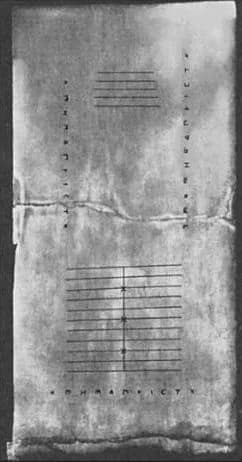
The Salamis Tablet is an example of this kind of early calculating surface. Instead of writing every step of a calculation, a person could move counters to help keep track of the numbers.
It is one of the most important surviving objects for understanding early manual calculation.
Where Did the Abacus Originate?
There is no single confirmed birthplace for every type of abacus.
The history of counting tools stretches across different regions. People created different ways to represent numbers based on their needs, the materials available to them, and their mathematical practices.
According to the Smithsonian, some early counting devices may have originated in the Middle East before the time of Christ. The Salamis Tablet provides separate archaeological evidence of an ancient counting board, although its exact cultural origin remains uncertain.
It is therefore important to distinguish between two questions:
- Where did early counting boards develop?
- Where did particular bead-frame designs, such as the Chinese suanpan and Japanese soroban, develop?
Although these questions are connected, each one may have a different answer.
No surviving evidence identifies one person or one location as the definite starting point for every instrument now called an abacus.
How Did the Abacus Develop Over Time?
The abacus did not suddenly appear in its modern form. Different calculating tools developed over many generations.
1. Early counting boards
Early counting boards used marked surfaces and movable counters. Depending on the system, the position of a counter could represent a particular number or group of numbers.
A person could move the counters while adding or subtracting. These tools helped people organise calculations without needing an electronic device or a written calculation for every step.
2. Counting devices in ancient Rome
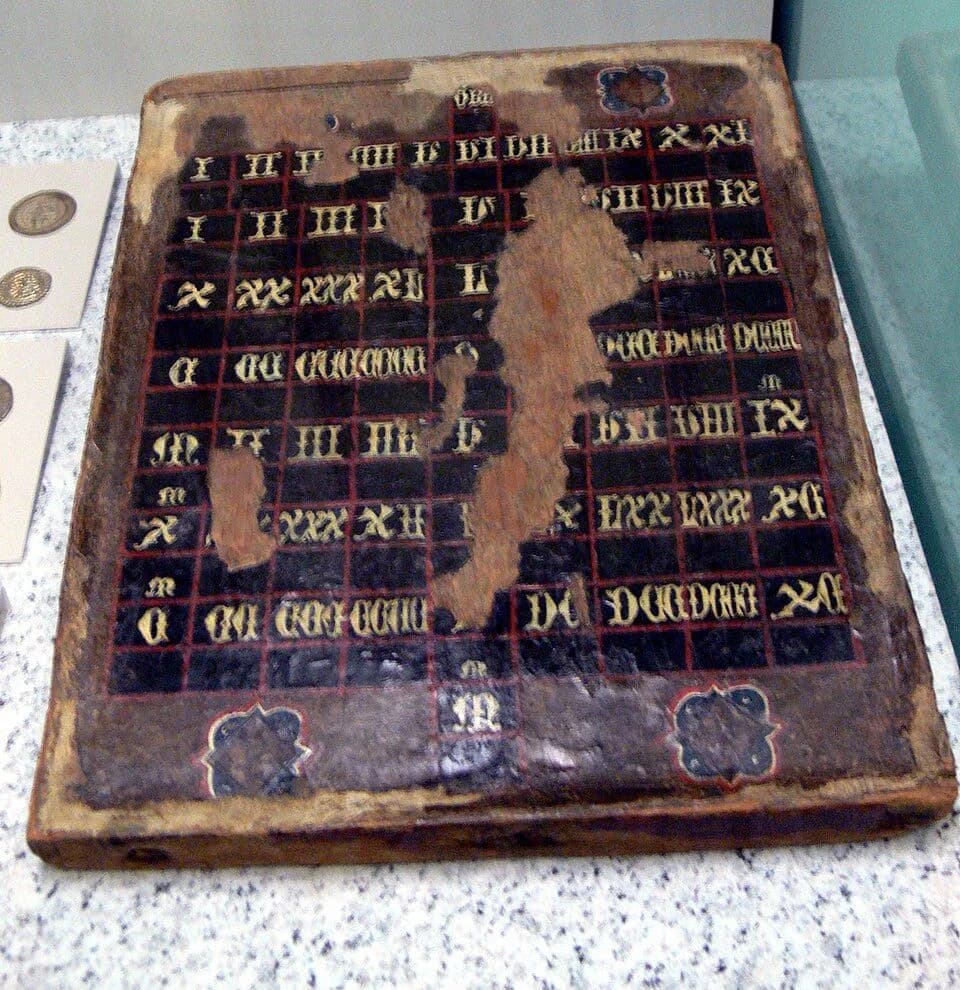
The Romans used calculating devices that included portable instruments with movable counters. These helped people perform arithmetic for practical tasks.
However, Roman counting devices were not all identical to the bead-frame abacuses used in many classrooms today. Their shapes and counting methods could differ.
3. The Chinese suanpan
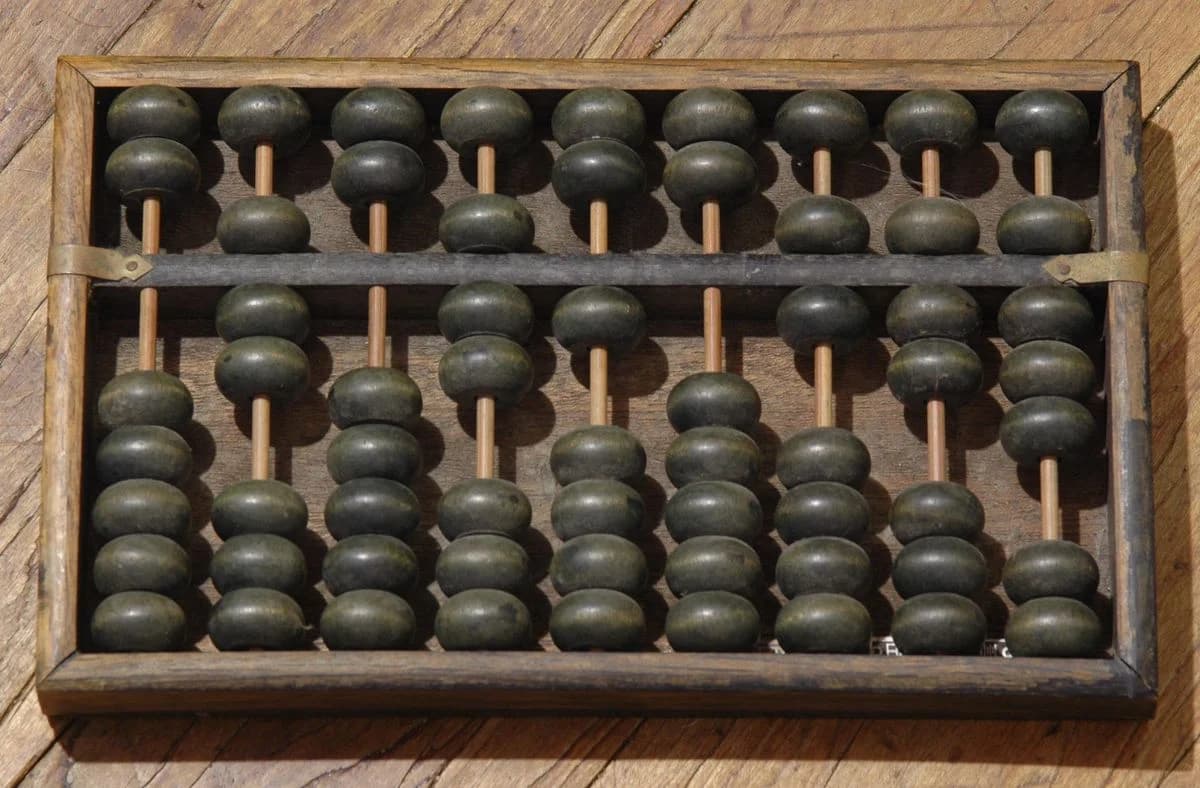
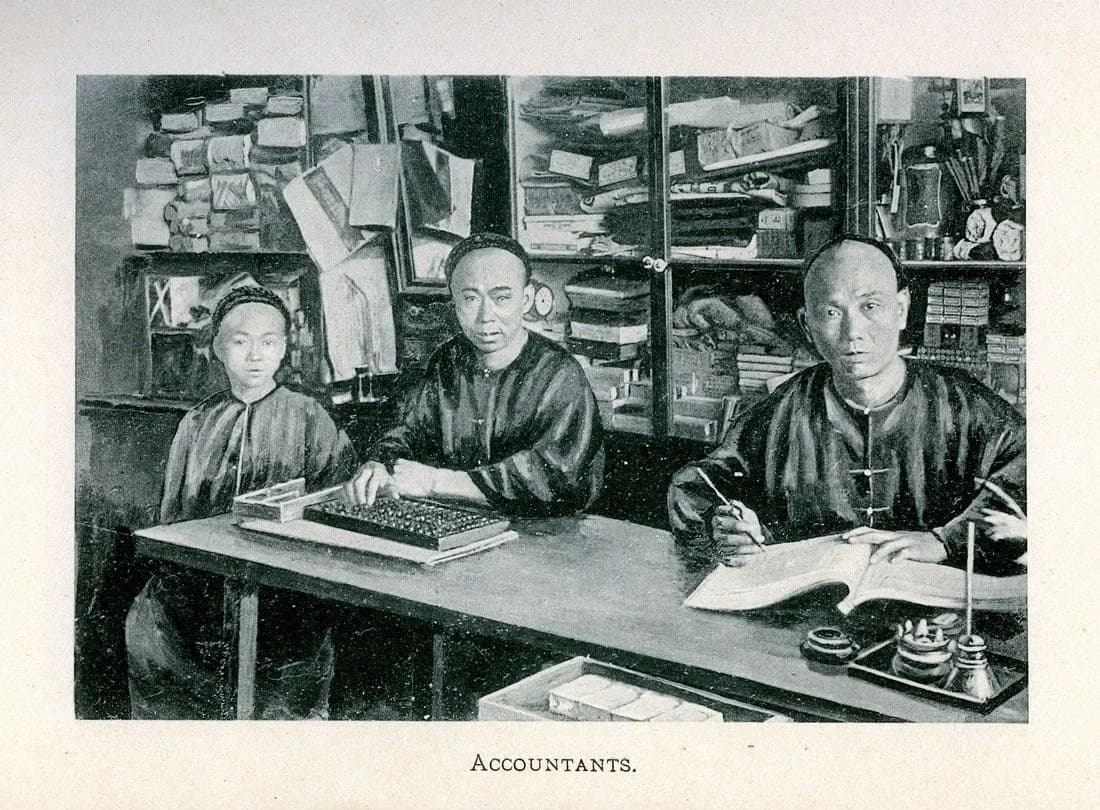
The Chinese suanpan is a traditional bead-frame calculating tool. It has a frame, rods, movable beads and a dividing beam.
A familiar traditional design has two beads above the beam and five below it on each rod. The upper beads represent five units each, while the lower beads represent one unit each, according to the place value of the rod.
The suanpan became an important part of China's calculating tradition. Its precise early development should be described carefully because historians do not have a complete record of every stage of its evolution.
4. The Japanese soroban
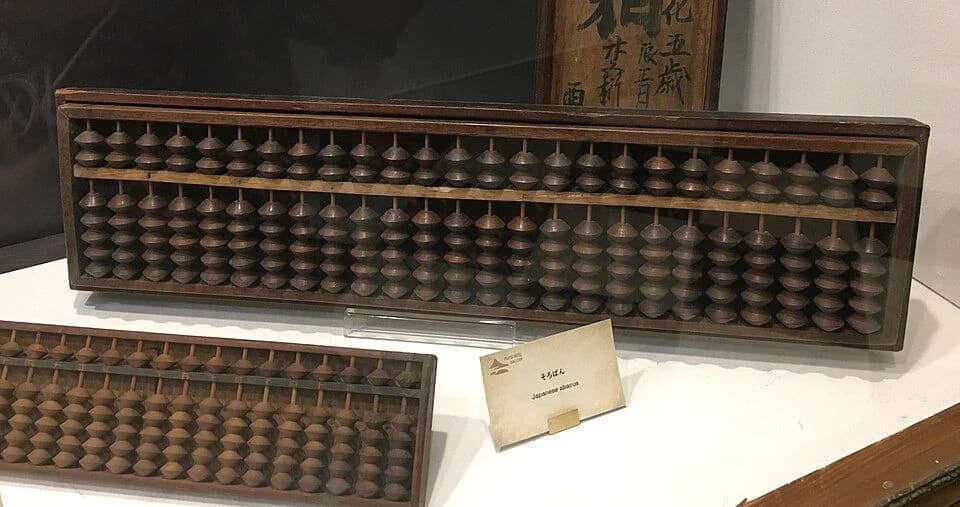
The Japanese soroban evolved from the broader East Asian practice of using bead-frame calculating tools. Over time, its design changed and became distinct from the traditional Chinese suanpan.
A common modern soroban has one upper bead and four lower beads on each rod. The upper bead represents five units, and each lower bead represents one unit according to the rod's place value.
The Japanese soroban is a good example of how a calculating tool can be adapted and improved over time.
The Japan Abacus Federation's history of the soroban explains how the one-upper-bead, four-lower-bead design became the standard modern form in Japan.
What Is the Difference Between an Ancient Counting Board and a Modern Abacus?
Although both tools help people calculate, their designs can be different.
| Feature | Ancient counting board | Bead-frame abacus |
|---|---|---|
| Main structure | A marked surface or board | A frame with rods and movable beads |
| Counters | Often loose stones or other counters | Beads attached to rods |
| How it works | Counters move across marked positions | Beads move along rods |
| Portability | Depends on the size and material | Many designs are easy to carry |
| Example | Salamis Tablet | Chinese suanpan or Japanese soroban |
An ancient counting board is not the same as every later bead-frame abacus. Both belong to the wider history of tools used for calculation.
For a closer look at the different designs, read our guide to different types of abacus.
Abacus History Timeline
Here is a simple timeline of selected events and developments. The dates refer to historical evidence or recognised periods, not a confirmed date for the invention of the abacus.
| Period | What happened? |
|---|---|
| Ancient times | People used counters, marked surfaces and other methods to represent numbers. |
| Around the fourth century BCE | The Salamis Tablet is generally dated to this period. |
| Ancient and medieval periods | Different counting devices continued to be used and adapted. |
| Historical China | The suanpan developed as an important bead-frame calculating device. |
| Historical Japan | The soroban developed from the wider East Asian bead-frame tradition. |
| Modern times | Abacuses continue to be used for calculation and education. |
Remember: The earliest surviving object is not necessarily the first object ever made. Many early counting tools may have been lost over time, leaving little or no evidence of their existence.
Why Is the Abacus Important Today?
The abacus is more than an old calculating tool. It is also a way to make numbers visible.
For example, moving beads can help a child see how a number changes when one is added or taken away. The rods can also represent units, tens, hundreds and larger place values.
Different schools and learning programmes use different teaching methods. An abacus can help demonstrate number concepts, but learning outcomes depend on the learner, the instruction and the amount of practice.
To learn more about how an abacus works, read our guide to understanding the abacus and its uses. For practical calculation demonstrations, visit our abacus examples for beginners page.
Frequently Asked Questions About Who Invented the Abacus
Who invented the abacus?
No single inventor is reliably known. The abacus developed over time through different counting methods and calculating devices used by different societies.
When was the abacus invented?
The exact invention date is unknown. The Salamis Tablet, an ancient counting board, is generally dated to around the fourth century BCE, but it does not prove when the first abacus was created.
Where was the abacus invented?
There is no confirmed single birthplace for all forms of the abacus. Different counting tools and bead-frame designs have distinct histories.
Is the abacus Chinese or Greek?
Both ancient Mediterranean counting boards and Chinese bead-frame abacuses are important to the broader history of calculation. These devices belong to different historical traditions and were not all built in the same way.
What is the oldest known counting board?
The Salamis Tablet is one of the best-known surviving ancient counting boards. It was discovered on the Greek island of Salamis and is generally dated to around the fourth century BCE.
Who invented the Chinese abacus?
The individual who first invented the Chinese suanpan is not reliably known. Its design developed as part of China's long history of calculation.
Who invented the Japanese soroban?
No single inventor of the Japanese soroban is reliably established. The instrument developed from the wider East Asian bead-frame tradition and was refined over time.
What was the abacus first used for?
Counting devices were used to represent quantities and help people perform calculations. Such tools were useful for practical tasks involving numbers, including trade and record-keeping.
What is the difference between a counting board and an abacus?
A counting board uses counters moved across a marked surface. A bead-frame abacus uses beads that move along rods inside a frame. Both help people calculate, but their structures differ.
What is a Chinese suanpan?
A suanpan is a traditional Chinese bead-frame calculating device. A common design has two beads above the dividing beam and five below it on each rod.
What is a Japanese soroban?
A soroban is a traditional Japanese abacus. A common modern design has one bead above the dividing beam and four below it on each rod.
Did the abacus exist before electronic calculators?
Yes, people used manual calculating devices centuries before electronic calculators were invented. People used them to represent numbers and carry out arithmetic.
Is the abacus still used today?
Yes. Abacuses are still used for manual calculation, number demonstrations and arithmetic education.
Why don't we know who invented the abacus?
Many early tools may have been made from materials that did not survive, and written records are incomplete. The available historical evidence does not identify one original inventor.
How did the abacus change over time?
Different designs developed across different historical traditions. Early counting boards used counters on surfaces, while bead-frame designs such as the suanpan and soroban used movable beads on rods.
Conclusion
The abacus has a long history, but its first inventor remains unknown. Ancient counting boards provide evidence of how people worked with numbers, while the Chinese suanpan and Japanese soroban show how bead-frame calculating tools developed into distinctive forms. The most important point is that the abacus was not demonstrably invented by one named person on one known date. It reflects the long history of how people developed practical methods to understand numbers and perform calculations.